Showing posts with label France. Show all posts

Saturday, June 10, 2017

Wine Infographic: Burgundy Cheat Sheet

New in the wine cheat sheet series:  Burgundy!

See the full collection of wine cheat sheets here.


To see the Cheat Sheet in full size…
…in Internet Explorer, right click on it and select “open in new tab.”
…in Chrome, right click on it and select “open link in new tab.”
…in Firefox, right click on it and select “view image.”


You may also be interested in:
French Wine Cheat Sheet
Bordeaux Cheat Sheet
Champagne Cheat Sheet
Loire Valley Cheat Sheet
Botrytis (Noble Rot) Cheat Sheet
Wine Altitude Cheat Sheet

Thursday, January 12, 2017

Wine Infographic: Merlot Cheat Sheet

Next in the wine cheat sheet series:  Merlot!

The full collection of wine cheat sheets is here.


To see the Cheat Sheet in full size…
…in Internet Explorer, right click on it and select “open in new tab.”
…in Chrome, right click on it and select “open link in new tab.”
…in Firefox, right click on it and select “view image.”  


You may also be interested in:
French Wine Cheat Sheet
Bordeaux Wine Cheat Sheet
California Wine Cheat Sheet
Washington and Oregon Wine Cheat Sheet
Chilean Wine Cheat Sheet
The Big 6 and Where They're Hiding

Monday, January 2, 2017

Bordeaux Trip - Free Info Session and Wine Tasting

Regular readers know that I'm acting as the wine educator on a river cruise through Bordeaux in October 2017.

If you're interested in learning more about the trip, join us at a free info session and wine tasting in February in Houston.

Check out the Facebook event here.

For location details or questions, RSVP to:  ClearLakeWineTasting@gmail.com

More information about the trip here.


Thursday, July 7, 2016

Wine Infographic: Bordeaux Wine Cheat Sheet

Next in the wine cheat sheet series:  Bordeaux!

I'll be the wine educator on a river cruise through Bordeaux in 2017. Want to come along? We have spaces available!

If you're interested in learning about Bordeaux, you may also want to check out the French Wine Cheat Sheet and the Botrytis (Noble Rot) Cheat Sheet.

The full collection of wine cheat sheets is here.


To see the Cheat Sheet in full size…
…in Internet Explorer, right click on it and select “open in new tab.”
…in Chrome, right click on it and select “open link in new tab.”
…in Firefox, right click on it and select “view image.”  

Friday, June 17, 2016

Experiencing Bordeaux in Books and Movies

When I travel, I like to learn as much as I can about the place I'm visiting before I go. A fun way to do that is through books and movies. Here's a collection of fiction and non-fiction books and movies I'm interested in reading and watching before I visit Bordeaux in 2017. (I'm assembling a group to go on a tour, and we still have spaces available. Email me if you're interested!)

I've marked the ones I've read or seen (*) and added a personal review, and I'll update this post as I make progress on the list.


Friday, June 3, 2016

Visit Granbury, taste great Texas wine.

Recently I wrote about the grapes that are thriving in Texas (Introduction to the Grapes of Texas). Roussanne is one of them. This white grape is native to France and appears in the white wines of France's Rhone Valley. It also appears in the red wines of the region, since it is one of the few white grapes allowed to be blended into Rhone's red wines in small quantities. Roussanne is primarily found in southern France, but its presence is growing in Texas, particularly in the Texas High Plains AVA.

Friday, May 13, 2016

Sorting Out the Names: A Brief History of Bordeaux

The names of the regions in and around Bordeaux can be confusing. For one thing, Bordeaux is the name of a city, a winemaking region, and a wine. In addition, many names get tossed around in relation to this part of France:  Bordeaux, Aquitaine, Gascony, Gironde, Dordogne. Let’s take a brief trip through history that will help us figure out what everyone is talking about.  Here’s the general area in question:

The city of Bordeaux and surrounding areas.

Friday, April 8, 2016

Wine Infographic: Champagne Cheat Sheet

Next in the wine cheat sheet series:  Champagne!  The most important thing is if it doesn't come from the Champagne region in France, it is not Champagne.  Just call it sparkling wine.

See the full collection of wine cheat sheets here.


To see the Cheat Sheet in full size…
…in Internet Explorer, right click on it and select “open in new tab.”
…in Chrome, right click on it and select “open link in new tab.”
…in Firefox, right click on it and select “view image.”   


You may also be interested in:
Wine Infographic:  French Wine Cheat Sheet (new and improved)
Wine Infographic:  Loire Valley Cheat Sheet
Tour Bordeaux with a French Wine Scholar in 2017

Thursday, February 25, 2016

Tour Bordeaux with a French Wine Scholar! (updated with new discounts)

Join our group on a river cruise through Bordeaux in October 2017!


More info...
  • AmaWaterways has created a great itinerary with a lot of wine tastings and activities. They plan the itinerary and run the cruise.
  • Travel with your own French Wine Scholar - me! I will be on the trip to provide additional educational opportunities, answer your questions, and help you get the most out of your experience. 
  • The ship holds ~150 people, but our group-within-a-group of ~15 will allow a more fun and personal experience, and you'll be able to get to know your fellow passengers and wine enthusiasts better.
Itinerary:  8-day/7-night "Taste of Bordeaux" cruise
Sailing Date:  October 26, 2017
Cruise vs. Cruise+Land:  I am doing just the cruise, but you have the option to extend the trip by a                                              few days on land either before or after the cruise.
Air Travel:  You may arrange your own air travel, have our travel agent book it for you, or purchase                       it through AmaWaterways.

I just booked my flights with AmaWaterways, and they are offering spectacular deals!


What are the discounts?

  • Discount on Double Occupancy Cabins:  $1000 off per person through the end of March.
  • Discount on Single Occupancy Cabins with Windows Only:   The single supplement is waived, so you pay the same price to have your own cabin!  This discount is good until they sell out of that cabin type.

Are you interested?

If you're interested in this trip, contact me! If you may be interested in future trips, please let me know that too.  I'll keep you posted on upcoming plans.


Happy wine travels!


Sunday, November 8, 2015

Wine Infographic: Syrah/Shiraz Wine Cheat Sheet

The next edition in the Wine Cheat Sheet series - Syrah/Shiraz!  See the full collection here.


To see the Cheat Sheet in full size…
…in Internet Explorer, right click on it and select “open in new tab.”
…in Chrome, right click on it and select “open link in new tab.”
…in Firefox, right click on it and select “view image.”     


You may also be interested in:
Wine Infographic: Australian Wine Cheat Sheet
Sixty-One: An IPA Brewed with Syrah Grape Must
Wine Infographic: Argentina Wine Cheat Sheet


Friday, October 23, 2015

The Story of Phylloxera: How a Tiny Insect Changed the Global Wine Industry Forever

In the late 1700s Thomas Jefferson, a connoisseur of French wine, attempted to grow European grape vines at his home in Virginia.  All of his imported European vines died, and he never knew why.  A century later, the whole world was introduced to the vine-killing culprit.

The tiny insect Daktulosphaira vitifoliae in the family Phylloxeridae (phylloxera for short) comes from eastern North America.  This almost microscopic, pale yellow insect, related to aphids, feeds on a grape vine’s roots and leaves.  Grape vines native to the same areas (such as Vitis aestivalis, rupestris, riparia, and labrusca) have developed resistance to this pest, but European grape vines (Vitis vinifera) have no resistance.


The Nymph Form of Phylloxera Feeds on Vine Roots

For many years, American grape vines were brought to Europe as botanical specimens. Phylloxera insects that hitched a ride on the vines went unnoticed and died during the weeks it took for sailing ships to cross the Atlantic.  All that changed in the 1850s when steam ships reduced trans-Atlantic crossing time to only ten days, a short enough time that the insects could survive the journey. Thus, phylloxera arrived and began its slow march across Europe.

The problem was first noticed in southern France in 1863, when leaves withered, shoots were weak, and grapes did not ripen.  Symptoms worsened for a few years until the vines died.  Pulling up the dead vines revealed that their root systems had nearly disappeared. Once phylloxera was identified as the problem, a cure was difficult to find.  Because phylloxera live on both roots and leaves, have a complex life cycle, and are highly adaptable, they are difficult to kill.  Common pesticides either weren’t effective or couldn’t reach the roots of the plant which were being eaten away.  New techniques developed for combatting phylloxera were ineffective, impractical, or nearly as destructive as phylloxera itself.


Phylloxera on a Grape Vine

The phylloxera epidemic impacted France the most, as it was the largest producer, consumer, and exporter of wine at the time.  But phylloxera eventually spread to all of Europe.  Between 60% and 90% of all European vineyards were destroyed during this time.  In France, wine production fell 75% between 1875 and 1889.  Ultimately the entire global wine industry was threatened.

The resulting shortage of wine affected many countries and wine markets.  At first, the decrease in supply of French wine increased the demand for wine from countries not yet affected by phylloxera, such as Spain and Italy, until phylloxera reached their vineyards as well.  Demand for Chilean wine increased, since Chile’s vineyards were planted primarily with imported European vines.  The shortage also created a market for terrible wine, made from imported raisins, or flavored with the used must (seeds and skins) left over from previous vintages and combined with beet sugar to produce alcohol.  It also inspired a flood of fake wine, poor quality wines labeled and sold fraudulently under the names of famous chateaux.  The wine shortage in France also led to an increase in the popularity of absinthe, a hugely influential beverage of the early 20th century which requires an article of its own.  In Britain, the Scotch industry promoted itself as a replacement beverage and many British wine drinkers switched.

In response to phylloxera, the French could not simply pull up their European vines and replant their vineyards with phylloxera-resistant American vines, because the American varieties produce undesirable (“foxy”) wine flavors.  By 1870 American and French scientists had created American-French hybrid vines which they hoped might resist the pest but still produce good wine.  The resulting hybrids had a weak resistance to phylloxera, but were hardy and produced reasonably good wine.  (Some of them are still grown in the United States today.)

The best option turned out to be grafting.  Attaching a European vine to American roots gives the European vine resistance to phylloxera.  (The rootstock that worked the best came from Texas!) Since the genes for the grapes are in the scion (stem), the grapes are unaffected.  Implementing this solution was another challenge, since France had around 11 billion vines in need of phylloxera protection.  Grafting was not accepted overnight.  It took nine years to prove its efficacy and for the French authorities to approve its widespread use. The finest vineyards were reluctant to graft and replant, since the identity of their wines was closely linked to the old, traditional vines.  These producers fought to chemically treat and save each vine, while the smaller, less recognized producers pulled up their vines, grafted, and replanted all at once.  Some producers smuggled American vines into France illegally and made wine directly from the grapes, despite the less desirable flavor and regulations against this practice. Unlike France, countries affected by phylloxera in later years had the benefit of knowing to graft their vines as soon as the problem appeared.


A European Scion Grafted onto American Rootstock

A few wine regions in the world escaped phylloxera completely.  Soils dominated by sand and schist impede the progress of the insect, as do dry climates.  Chile, bordered by an ocean to the west, mountains to the east, desert to the north, and the Antarctic to the south, has never been invaded by phylloxera, though to this day any imported vines must be carefully checked and quarantined.  A quarantine is in effect in South Australia, because it hasn’t yet experienced phylloxera, though neighboring Victoria has.  The island of Cyprus, the Spanish region of Jumilla, and a handful of vineyards in France, Portugal, New Zealand, Greece, England, and the pacific northwest of the United States have also escaped this costly pest so far.

However, the danger is still present, as evidenced by the disaster that struck the California wine industry in the 1980s and 1990s.  Many vines had been grafted onto rootstock beneficial for production, but with a low resistance to phylloxera, under the assumption that the insect was not present in the area.  Phylloxera struck, killing many vines, causing many more to be replaced, and ultimately costing the California wine industry more than one billion dollars.

Ironically, a phylloxera infestation can bring about positive changes.  The need to dig up and replant vines provides an opportunity to change grape varieties to better suit a particular vineyard, or adjust the density of the plantings.   Grafting itself can be helpful, because the grower can choose a type of rootstock which thrives in the specific soil and weather conditions of the vineyard.

Does grafting affect the taste of the wine?  Opinions differ.  While some top wine critics say they cannot taste the difference between grafted and ungrafted grapes, others claim that the ungrafted and pre-phylloxera vines make better tasting wine.  One possible reason for any flavor difference might be that ungrafted vines may produce lower yields.

Phylloxera is the most destructive crop epidemic of all time, and it changed the wine industry forever. Today 85% of the wine grapes in the world come from European vines grafted onto American rootstock.  Despite the enormous costs, phylloxera acted as a catalyst for a huge growth in grape vine knowledge, the chance to improve viticultural practices in established vineyards, a more resilient global wine industry, and in many cases better wine.


You may also be interested in:

Friday, October 2, 2015

Film Review: Red Obsession

If you follow any wine news, you’ve probably heard of the growing Chinese influence in the wine market, especially in Bordeaux.  Red Obsession opens with a parade of Bordeaux wine makers, wine critics, authors, and Francis Coppola (!) waxing poetic about the greatness of Bordeaux.  They talk of “magic,” “love,” “soul,” “miracle,” and use musical metaphors.  Just as I was getting impatient with the flattery, the real story begins with a short history of Bordeaux and a fast-forward to the en primeur event in 2010.  En primeur happens every year in Bordeaux.  Critics, journalists, and buyers are invited to taste the unfinished wines before their release.  Based on the response, the chateaux set their prices for the year.  Enter China’s nouveau riche, for whom no price seems too high for their favorite wine.

This documentary covers an amazing amount of ground in a short time.  How did the Chinese become so important in the fine wine market so suddenly?  Why do they love Bordeaux in general, and Lafite in particular?  Is there a downside to this new source of money and attention for Bordeaux winemakers?  Where does this leave Bordeaux’s former largest market, the United States?  What’s next for China, as it is poised to become the world’s largest wine market and a new producer of wine itself?

The filmmakers travel the world and interview an impressive array of experts and industry insiders, looking for the answers to all these questions.  I’ll admit that before watching Red Obsession, my knowledge of the Bordeaux-China connection was limited to the fact that the Chinese really like Bordeaux and are willing to pay high prices for it.  The film is packed with details and explanations that will be interesting even to those more familiar with the subject than I was, such as cultural factors, business interests, and the influence of westernization.  Though the subject seems narrow, the film provides so much context that it also educates its audience about the French wine industry, the Chinese wine market, and the emerging Chinese wine industry overall.  If you have any interest in these subjects, Red Obsession is worth 75 minutes of your time.

(Not Rated, 2013, 75 minutes, Directed by Warwick Ross and David Roach, Narrated by Russell Crowe)

Tuesday, August 4, 2015

Profile of the Black Spanish Grape

Check out my latest article for HomeBrewTalk.com:

Profile of the Black Spanish Grape

All my articles for Home Brew Talk are available here.
All my articles for Wine Making Talk are available here.

Friday, June 19, 2015

Wine Infographic: Loire Valley Cheat Sheet

Next in the Wine Cheat Sheet series:  Loire Valley!

See the full collection of wine cheat sheets here.


To see the Cheat Sheet in full size…
…in Internet Explorer, right click on it and select “open in new tab.”
…in Chrome, right click on it and select “open link in new tab.”
…in Firefox, right click on it and select “view image.”   


You may also be interested in:
An eclectic list of good white wines under $15
Sauvignon Blanc Cheat Sheet
Returning to Messina Hof for my 1st harvest and grape stomp!

Friday, January 16, 2015

Check out my article on rosé at WineMakingTalk.com

I'll be writing articles occasionally at WineMakingTalk.com.  The first one is about the 3 ways to make rosé wine, with infographics (of course).

See it here:

3 Ways to Make Rosé 

Friday, December 5, 2014

Wine Infographic: Wine Altitude Cheat Sheet

Altitude is an important factor affecting grapes and wine. Here's your cheat sheet for what it does, why it matters, and which wine regions are impacted by it.

See the full collection of Wine Cheat Sheets here.


To see the Cheat Sheet in full size…
…in Internet Explorer, right click on it and select “open in new tab.”
…in Chrome, right click on it and select “open link in new tab.”
…in Firefox, right click on it and select “view image.”   


You may also be interested in:
Wine Infographic: Botrytis (Noble Rot) Cheat Sheet
Wine Infographic: Texas Wine Cheat Sheet
Acid 101
Tannin 101

Friday, November 21, 2014

Wines for Thanksgiving

I've been drinking more Texas wine lately, so this year I'm serving Texas wine at Thanksgiving.  I like to offer guests a red and a white, so I've chosen McPherson Viognier and Becker Claret.

Here are some previous posts that can help you decide what to drink with your Thanksgiving meal this year:

-- Riesling, whether sweet or dry, is a classic choice.  If you go this route, you might want to consult the Riesling Cheat Sheet or "My continuing quest for cheap, dry Riesling."

-- Reds or rosés from the Southern Rhone Valley in France would also be a good choice.

-- If you're interested in serving sparkling wine, check out "The 2-Minute Guide to Bubbles."

-- See last year's recommendations for reds, whites, and sparkling wines at "Ideas for Thanksgiving."

-- I recently posted the Botrytis Cheat Sheet, a primer on the fungus that contributes to many amazing dessert wines. Any of these botrytis-affected wines would pair well with your pumpkin pie.

Happy Thanksgiving!

Friday, October 31, 2014

Wine Infographic: Botrytis (Noble Rot) Cheat Sheet

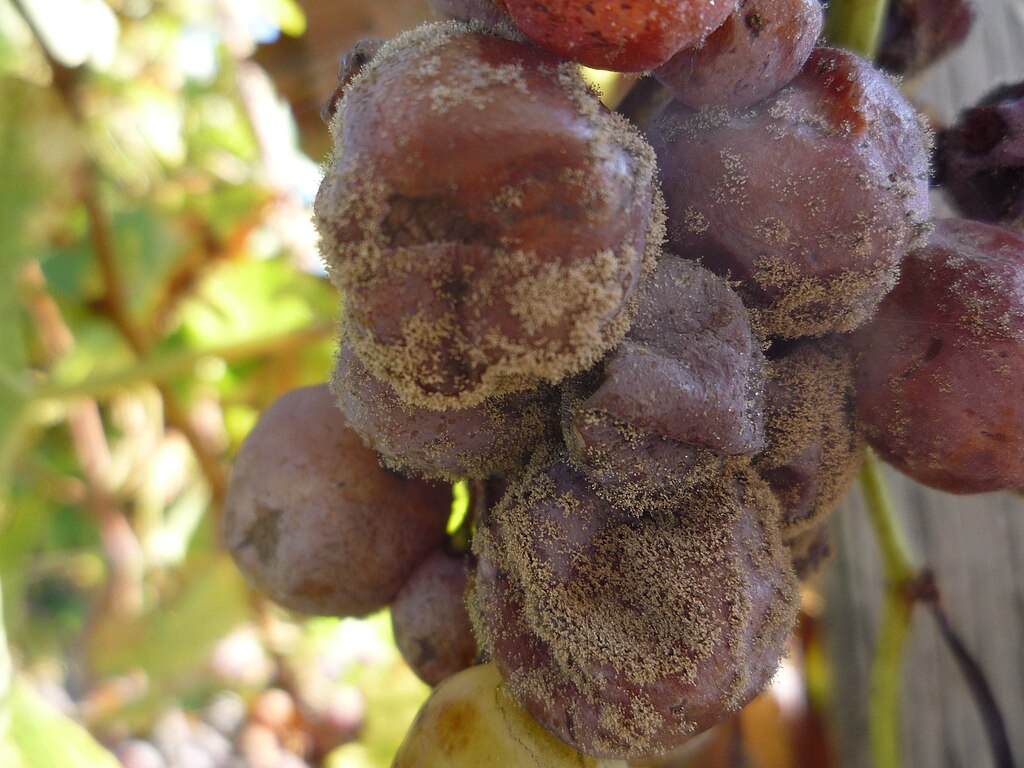
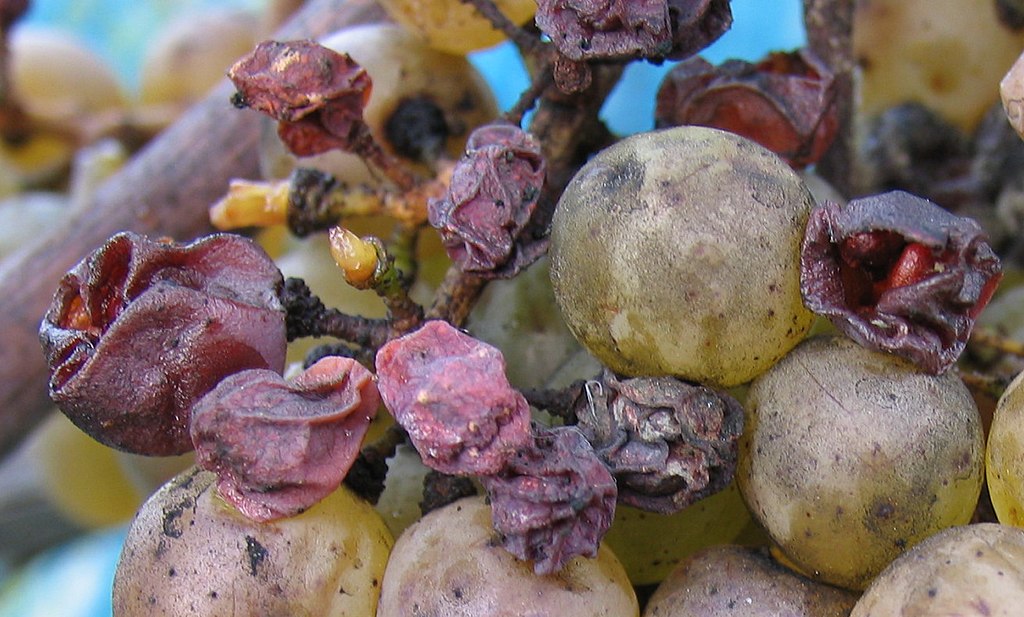
Botrytis cinerea, often called Noble Rot, is a fungus that is essential to some of the most famous, expensive, and delicious dessert wines in the world.  Any of these wines would be great with your pumpkin pie at Thanksgiving!

Here's your cheat sheet for what botrytis is, how it happens, and where to find the wines it has shaped.  (See the full collection of Wine Cheat Sheets here.)


To see the Cheat Sheet in full size…
…in Internet Explorer, right click on it and select “open in new tab.”
…in Chrome, right click on it and select “open link in new tab.”
…in Firefox, right click on it and select “view image.”   

Wikipedia commons has some great pictures of botrytis at work:


Friday, September 5, 2014

An eclectic list of good white wines under $15

I usually drink more red wines than white, but in the summer I like the cooler, lighter whites to combat the Houston heat.  Summer may be over (at least according to the school calender - the autumnal equinox won't arrive and officially bring fall with it until September 22), but we all know Houston will be sweltering for another month at least.  So I figured it wasn't too late to share a list of good white wines under $15.  This is a very eclectic list, based solely on what I happen to have tasted lately, so it's by no means exhaustive or even well-rounded.  But hopefully it will point you to something new to try!  

If I've written about the wine before, I linked to that post.  I also added a few words about the flavor profile.


DRY
  • Buchegger Riesling, from Austria
    • very fruity
  • Pewsey Vale Dry Reisling, from Australia
    • lemon, apricot, and minerality
  • Chateau Ste. Michelle Dry Riesling, from Washington State
    • green apple and lemon with some minerality
    • (link to buy online)
  • Sartori Pinot Grigio, from Italy
    • citrus, mineral, and floral notes
  • Fontana Candida Terre dei Grifi Frascati, from Italy
    • citrus, pineapple, with a hint of toast
  • Abadia de San Campio Terras Gauda Albarino, from Spain
    • citrus and pear, little-to-no oak
  • Vignerons du Pallet Muscadet, from the Loire Valley in France
    • simple citrus flavors, with bready qualities from sur lie aging
  • Gerard Bertrand Picpoul de Pinet, from Coteau de Languedoc in France
    • simple and fruity, little-to-no oak
  • McPherson Viognier, from Texas
    • tropical fruits, floral notes, balanced by earthiness

DRY SPARKLING
  • Anna de Codorniu, Brut Cava, from Spain
    • fruity and toasty, a bit like Champagne
    • (link to buy online)

DRY, HALF-SPARKLING (petillant/frizzante)

OFF DRY
  • Sauvion Vouvray (Chenin Blanc), from the Loire Valley in France
    • apple, lemon, peach, and earthiness

OFF DRY, HALF-SPARKLING (petillant/frizzante)
All of these are Vinho Verdes, and though they vary a bit in sweetness and flavor profile, they share the same crisp, refreshing, citrusy qualities.

MEDIUM SWEET

Friday, August 22, 2014

Wine Infographic: Riesling Cheat Sheet

Next up in the wine cheat sheet series:  Riesling!

See the full collection of wine cheat sheets here.


To see the Cheat Sheet in full size…
…in Internet Explorer, right click on it and select “open in new tab.”
…in Chrome, right click on it and select “open link in new tab.”
…in Firefox, right click on it and select “view image.”   

You might also be interested in:
Wine Infographic:  German Wine Cheat Sheet
How to Tell if German Wine is Sweet or Dry
How Sweet is Your Riesling (part 2)