Showing posts with label Riesling. Show all posts

Friday, June 9, 2017

Wine Infographic: Wine 101 Cheat Sheet

Next in the wine cheat sheet series:  Wine 101.  Everything you need for a basic understanding of wine.


To see the Cheat Sheet in full size…
…in Internet Explorer, right click on it and select “open in new tab.”
…in Chrome, right click on it and select “open link in new tab.”
…in Firefox, right click on it and select “view image.”


You may also be interested in:
Acid 101
Tannin 101
U.S. Wine Cheat Sheet

Friday, March 11, 2016

Wine Infographic: French Wine Cheat Sheet - new and improved!

The original French Wine Cheat Sheet was one of the first wine cheat sheets I ever made, more than 3 years ago. I've gotten better at it since then! Here's the new and improved version.

This kicks off a greater focus on French wine in my personal tasting and studying, in preparation for being the wine educator on a river cruise through Bordeaux next year. Want to come along? Find more info here:  Tour Bordeaux with a French Wine Scholar.

The full collection of wine cheat sheets is here.


To see the Cheat Sheet in full size…
…in Internet Explorer, right click on it and select “open in new tab.”
…in Chrome, right click on it and select “open link in new tab.”
…in Firefox, right click on it and select “view image.”   


Friday, January 30, 2015

Wine Infographic: Washington and Oregon Wine Cheat Sheet

Next in the wine cheat sheet series:  Washington and Oregon!

See the full collection of wine cheat sheets here.


To see the Cheat Sheet in full size…
…in Internet Explorer, right click on it and select “open in new tab.”
…in Chrome, right click on it and select “open link in new tab.”
…in Firefox, right click on it and select “view image.”   

You may also be interested in:
Texas Wine Cheat Sheet
Cabernet Sauvignon Cheat Sheet
Wine Altitude Cheat Sheet
Riesling Cheat Sheet


Friday, November 21, 2014

Wines for Thanksgiving

I've been drinking more Texas wine lately, so this year I'm serving Texas wine at Thanksgiving.  I like to offer guests a red and a white, so I've chosen McPherson Viognier and Becker Claret.

Here are some previous posts that can help you decide what to drink with your Thanksgiving meal this year:

-- Riesling, whether sweet or dry, is a classic choice.  If you go this route, you might want to consult the Riesling Cheat Sheet or "My continuing quest for cheap, dry Riesling."

-- Reds or rosés from the Southern Rhone Valley in France would also be a good choice.

-- If you're interested in serving sparkling wine, check out "The 2-Minute Guide to Bubbles."

-- See last year's recommendations for reds, whites, and sparkling wines at "Ideas for Thanksgiving."

-- I recently posted the Botrytis Cheat Sheet, a primer on the fungus that contributes to many amazing dessert wines. Any of these botrytis-affected wines would pair well with your pumpkin pie.

Happy Thanksgiving!

Friday, October 31, 2014

Wine Infographic: Botrytis (Noble Rot) Cheat Sheet

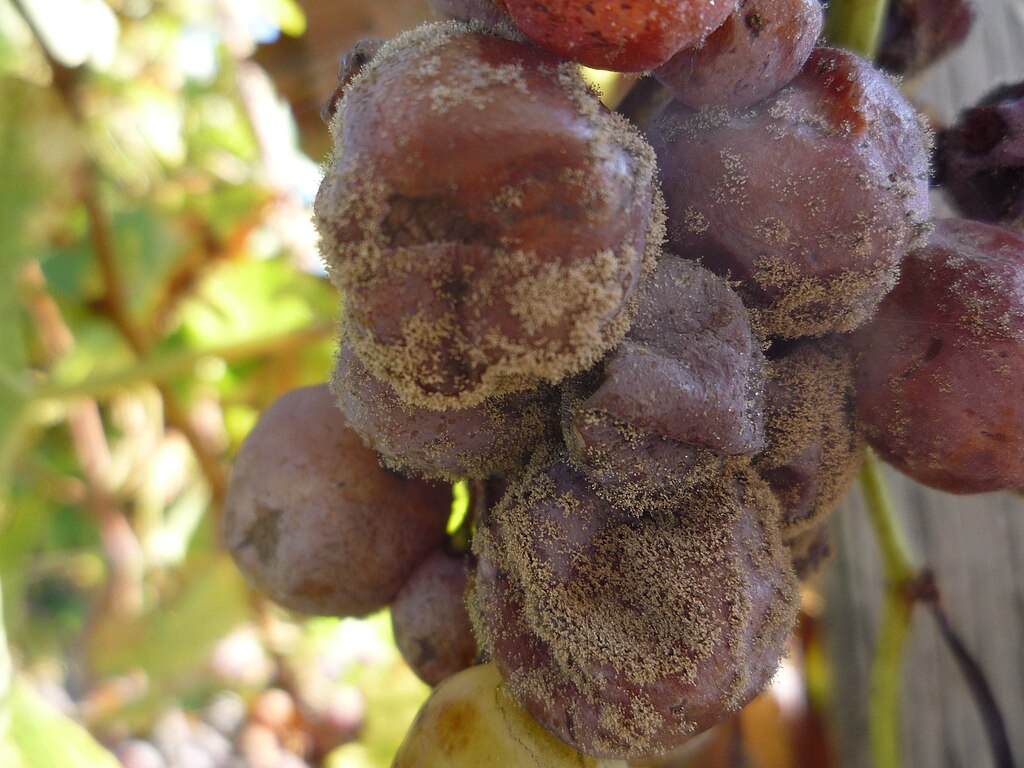
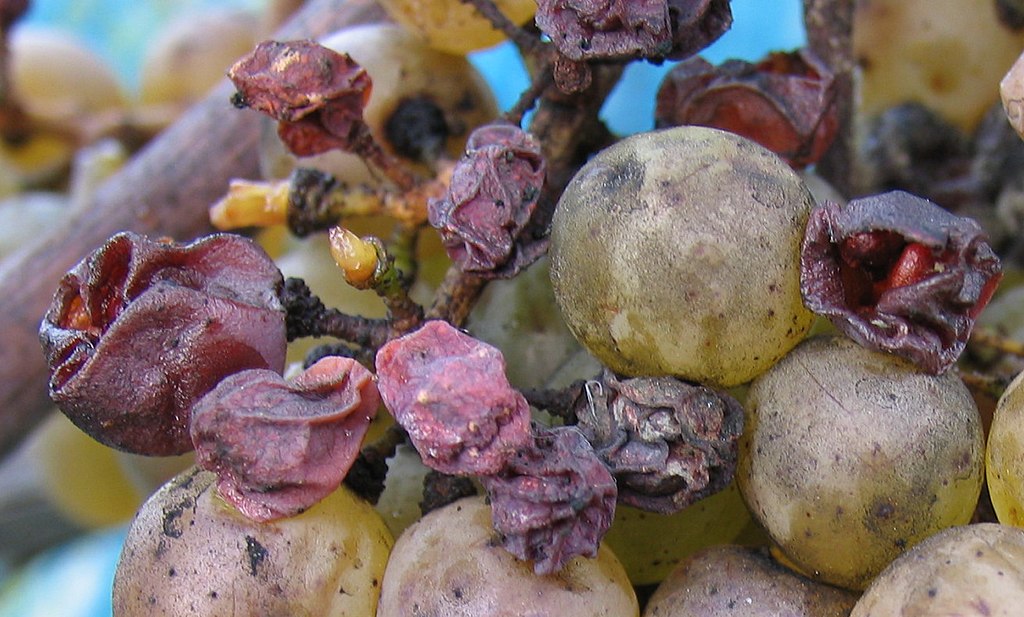
Botrytis cinerea, often called Noble Rot, is a fungus that is essential to some of the most famous, expensive, and delicious dessert wines in the world.  Any of these wines would be great with your pumpkin pie at Thanksgiving!

Here's your cheat sheet for what botrytis is, how it happens, and where to find the wines it has shaped.  (See the full collection of Wine Cheat Sheets here.)


To see the Cheat Sheet in full size…
…in Internet Explorer, right click on it and select “open in new tab.”
…in Chrome, right click on it and select “open link in new tab.”
…in Firefox, right click on it and select “view image.”   

Wikipedia commons has some great pictures of botrytis at work:


Friday, September 5, 2014

An eclectic list of good white wines under $15

I usually drink more red wines than white, but in the summer I like the cooler, lighter whites to combat the Houston heat.  Summer may be over (at least according to the school calender - the autumnal equinox won't arrive and officially bring fall with it until September 22), but we all know Houston will be sweltering for another month at least.  So I figured it wasn't too late to share a list of good white wines under $15.  This is a very eclectic list, based solely on what I happen to have tasted lately, so it's by no means exhaustive or even well-rounded.  But hopefully it will point you to something new to try!  

If I've written about the wine before, I linked to that post.  I also added a few words about the flavor profile.


DRY
  • Buchegger Riesling, from Austria
    • very fruity
  • Pewsey Vale Dry Reisling, from Australia
    • lemon, apricot, and minerality
  • Chateau Ste. Michelle Dry Riesling, from Washington State
    • green apple and lemon with some minerality
    • (link to buy online)
  • Sartori Pinot Grigio, from Italy
    • citrus, mineral, and floral notes
  • Fontana Candida Terre dei Grifi Frascati, from Italy
    • citrus, pineapple, with a hint of toast
  • Abadia de San Campio Terras Gauda Albarino, from Spain
    • citrus and pear, little-to-no oak
  • Vignerons du Pallet Muscadet, from the Loire Valley in France
    • simple citrus flavors, with bready qualities from sur lie aging
  • Gerard Bertrand Picpoul de Pinet, from Coteau de Languedoc in France
    • simple and fruity, little-to-no oak
  • McPherson Viognier, from Texas
    • tropical fruits, floral notes, balanced by earthiness

DRY SPARKLING
  • Anna de Codorniu, Brut Cava, from Spain
    • fruity and toasty, a bit like Champagne
    • (link to buy online)

DRY, HALF-SPARKLING (petillant/frizzante)

OFF DRY
  • Sauvion Vouvray (Chenin Blanc), from the Loire Valley in France
    • apple, lemon, peach, and earthiness

OFF DRY, HALF-SPARKLING (petillant/frizzante)
All of these are Vinho Verdes, and though they vary a bit in sweetness and flavor profile, they share the same crisp, refreshing, citrusy qualities.

MEDIUM SWEET

Thursday, August 28, 2014

My continuing quest for cheap, dry Rieslings

As regular readers know, dry Riesling is quite possibly my favorite white wine.  Many good, dry Rieslings are priced around $20 (or more), which puts them out of my "everyday wine" price range, so I'm always looking for inexpensive options.

First, it bears repeating that, contrary to popular belief, not all Rieslings are sweet.  There are various ways to tell whether a bottle of Riesling will be sweet, dry, or somewhere in between.  I wrote about a strategy for predicting the sweetness level of German wines here.  Even better is the International Riesling Foundation's sweetness scale, which some producers put on their labels.

My current favorite cheap, dry Riesling is Pewsey Vale from the Eden Valley in Australia (which I've mentioned before here).  It runs $12 - $15, which is a great value.  But there are several other dry Rieslings which are widely available and even cheaper!  So of course I had to try them.  

The title holder and the challengers:


The 2 "challenger" dry Rieslings both come from the Columbia Valley in Washington State.  The Pacific Rim Dry Riesling costs about $9, while the Chateau Ste. Michelle is around $8.  Incidentally, they both use the International Riesling Foundation's sweetness scale on their back labels (as does Pewsey Vale).


One difference between these wines jumps out right away - the different bottle shapes.  Chateau Ste. Michelle uses the traditional German flute, while Pacific Rim uses the common "Bordeaux" bottle.  This can indicate a difference in the style of the wine.  German-style Rieslings tend to be lighter and more minerally (less fruit-forward), while Rieslings from the "new world" of wine (outside Europe) tend to be richer and fruitier.  Sure enough, when I tasted them side by side, Pacific Rim was fruitier, while Chateau Ste. Michelle in the German-style bottle was lighter and leaner.

Here are the full tasting notes:

2012 Pacific Rim Dry Riesling
  • Color:  pale yellow
  • Aroma:  pungent citrus and rich apricot with mineral undertones
  • Palate:  high acid, flavors generally match aromas, slightly bitter and hot on the finish, medium body, 12.5% abv
2012 Chateau Ste. Michelle Dry Riesling
  • Color:  pale yellow
  • Aroma:  bright lemon and peach with lots of earthy, mineral character, and a hint of the "petrol" quality that some Rieslings have
  • Palate:  high acid, flavors generally match aromas, medium body (but a bit lighter than Pacific Rim), 13% abv  (Though this alcohol level is higher than the Pacific Rim, this wine seems better balanced and integrated.)
Neither of these were bad wines, but they didn't blow me away.  I liked the Chateau Ste. Michelle a little better.  They're both a good value for the price, but I think in most cases I'd pay a few dollars more and buy a bottle of Pewsey Vale.  So Pewsey Vale remains my favorite cheap, dry Riesling, but I'll keep my eyes open for other potential contenders.  Please let me know if you have one to recommend!

A note on food pairings:  Rieslings are often paired with Asian and/or highly spiced foods, so I drank these with Baharat roasted cauliflower and Indian-spiced eggplant over pasta.  Please forgive my poor food photography...


The wines paired well with these dishes.  But don't forget that the Riesling grape originates in Germany, so Rieslings are a good choice with any type of German food as well, like sausage and sauerkraut, pork chops, chicken and dumplings, etc.

Friday, August 22, 2014

Wine Infographic: Riesling Cheat Sheet

Next up in the wine cheat sheet series:  Riesling!

See the full collection of wine cheat sheets here.


To see the Cheat Sheet in full size…
…in Internet Explorer, right click on it and select “open in new tab.”
…in Chrome, right click on it and select “open link in new tab.”
…in Firefox, right click on it and select “view image.”   

You might also be interested in:
Wine Infographic:  German Wine Cheat Sheet
How to Tell if German Wine is Sweet or Dry
How Sweet is Your Riesling (part 2)

Friday, August 1, 2014

Wine Infographic: New Zealand Wine Cheat Sheet

Next up in the series:  New Zealand!  You're probably familiar with New Zealand's famous Sauvignon Blancs, but they make other wines too, many of which are light, fresh, and great for warm weather.

See the full collection of wine cheat sheets here.


To see the Cheat Sheet in full size…
…in Internet Explorer, right click on it and select “open in new tab.”
…in Chrome, right click on it and select “open link in new tab.”
…in Firefox, right click on it and select “view image.”   


You might also be interested in:
Improve Your Tasting Skills: Sauvignon Blanc and Gooseberries

Thursday, July 10, 2014

Wine Infographic: Recognizing Top Quality German Wine

As a follow-up to my German Wine Cheat Sheet from a few weeks ago, I'm sharing this guest infographic, which comes from the German auction house Auctionata. Since they deal in fine wine, they've developed this guide for international drinkers. They're going to help us navigate those complex German wine labels, which offer a wealth of information about the wine.  You can download a pdf of this graphic from Auctionata's blog at this link.


Friday, June 27, 2014

Wine Infographic: German Wine Cheat Sheet

Next up in the series: Germany!  German white wines are wonderful to drink in the summer heat, so now is the time to explore them.  (See the full collection of wine cheat sheets here.)


To see the Cheat Sheet in full size…
…in Internet Explorer, right click on it and select “open in new tab.”
…in Chrome, right click on it and select “open link in new tab.”
…in Firefox, right click on it and select “view image.”   

Sunday, February 9, 2014

Wine Infographic: Australian Wine Cheat Sheet

This wine cheat sheet has been updated. See the new and improved Australian Wine Cheat Sheet here.
--------------------------
As regular readers know, I’m on a quest to make one-page cheat sheets for the world’s major grapes and wine regions.  (See the full collection here.)  This week we go to Australia!  


To see the Cheat Sheet in full size…
…in Internet Explorer, right click on it and select “open in new tab.”
…in Chrome, right click on it and select “open link in new tab.”
…in Firefox, right click on it and select “view image.”     

Sponsored Note:  I have recently corresponded with the nice people at D’Vine Wine Tours, a new venture which offers wine tours, day trips, private charters, and corporate event planning in the Swan Valley region near Perth.  They combine their expertise in tourism and wine to create a fun and educational atmosphere with something for everyone.  Give them a call if you’re in the area!

Tuesday, November 26, 2013

Another Vote for Pewsey Vale

Jeremy Parzen, often known as Do Bianchi, writes the Wine Time column for the Houston Press food blog "Eating...Our Words."  Today he posted "Toasting the Turkey: Seven Top Wines for a Perfect Thanksgiving 2013."  

One of the wines he recommends is the Pewsey Vale Dry Riesling I wrote about last week.  It's really tasty and a great price - I hope you try some!

Friday, November 22, 2013

The IRF Sweetness Scale & Cheap Dry Riesling

Riesling can be a problematic wine, because it can range from fully dry to fully sweet, and it's not always obvious from the label where on the spectrum a particular wine will fall.  Almost a year ago I wrote about a simple way to use the German labeling system and the alcohol content to make a good guess at the sweetness level (more on that here).  And shortly afterward I posted about a sweetness scale that the International Riesling Foundation is encouraging Riesling producers to use on their labels, so that we know for sure what we're buying (more on that here).  The sweetness scale is great for people like me who are more interested in dry Rieslings, which are in the minority.

I've seen the sweetness scale on a few bottles so far.  One is the Pewsey Vale Dry Riesling from Australia's Eden Valley.  It says "dry" on the front, but also includes the sweetness scale on the back.  It has a medium body, high acid, and the lemony apricot flavors you'd expect from this grape.  It also has that nice minerality that many of us want from our Riesling.  At $12 it's a good value.  I found it at Costco.


It's a common belief among consumers that all Rieslings are sweet, and Riesling producers are aware of that, so those that make a dry Riesling are often the first to label their bottles that way.  Chateau Ste. Michelle puts "Dry Riesling" on its front label, although I don't believe it uses the IRF sweetness scale on the back.  Incidentally, that wine is also a great value if you're looking for an inexpensive dry Riesling, at less than $8 at Spec's.


I'm looking forward to seeing the scale used more often.  I think it's a great thing - a big help to consumers that I'm sure will ultimately increase sales for the producers.

Friday, October 25, 2013

Wine Infographic: United States Cheat Sheet

Update:  I've revised and updated this cheat sheet. Check out the new and improved U.S. Wine Cheat Sheet.

=============
I'm working on making cheat sheets for all the major wine regions in the world.  (See the full collection here.)  Here's one covering the United States, without California.  California produces 90% of the wine that comes from the U.S., so it will get its own page.

This overview includes information on climate, grapes, wine laws, and major American Viticultural Areas (AVAs).  AVAs are the American version of AOCs in France or DOCs in Italy, except with far fewer regulations.  I included some technical details that might not be of interest to the casual consumer, but are necessary for any serious wine students to know - such as labeling requirements and latitude.

I chose 4 states to focus on - New York, Washington, Oregon, and Texas.  The first 3 were the top producers of wine in the U.S. in 2012 (after California).  And I included Texas because I live here and I'm interested!

I hope you'll find this cheat sheet useful and educational, and that it will inspire you to try a wine from a place you've never had before!  My personal favorites from these regions are Pinot Gris from Oregon, Cabernet Sauvignon and dry Riesling from Washington, and Cabernet Franc and dry Riesling from New York.


To see the Cheat Sheet in full size…
…in Internet Explorer, right click on it and select “open in new tab.”
…in Chrome, right click on it and select “open link in new tab.”
…in Firefox, right click on it and select “view image.”   

Saturday, February 9, 2013

Wine Infographic: French Wine Cheat Sheet

Update:  I've created a new and improved French Wine Cheat Sheet.  Find it here.
-----------------------
For the Introduction to French Wine class that I taught last week, I developed a one-page cheat sheet for the major regions, grape varieties, and appellations.  I've found this information extremely useful when buying French wine, so hopefully it will help you branch out and try something new!  (See the full collection of wine cheat sheets here.)


To see the Cheat Sheet in full size…
…in Internet Explorer, right click on it and select “open link.”
…in Chrome, right click on it and select “open image in new tab.”
…in Firefox, right click on it and select “view image.”  

Saturday, December 15, 2012

How Sweet is Your Riesling? (part 2)


Many people avoid Rieslings because they don’t drink sweet wine.  However, Rieslings can be completely dry, extremely sweet, and everything in between.  The trouble is that it’s often difficult to tell how sweet any given bottle will be.  I've written before about the German system that can help with this, but now there's an even easier way!

The International Riesling Foundation has come to the rescue!  It has developed a sweetness scale that winemakers can include on their labels.  This scale is designed to “make it easier for consumers to predict the taste they can expect from a particular bottle of Riesling,” help consumers find wines they’ll enjoy, and thus help producers sell more wine.  The scale is entirely voluntary, but hopefully many producers will decide to participate.  (The scale was first available for the 2008 vintage.)

Saturday, November 10, 2012

How to Tell if German Wine is Sweet or Dry


German wine, which is primarily made from the Riesling grape, has a reputation for being sweet, but in reality it ranges from fully dry to fully sweet.  But if the bottles don’t tell you how sweet they are (and they usually don’t), how do you find the one you want?  A little background knowledge of the German quality system, the fermentation process, and some simple math.

Sweetness Levels
Wine sweetness levels in general are usually classified on the following scale:
  • Dry – not sweet at all (most wine falls here)
  • Off-dry – just a little sweet (a lot of Rieslings are here)
  • Medium-sweet – pretty darn sweet (Moscato d’Asti is usually classified here)
  • Sweet (or fully sweet) – very sweet, like dessert (non-sparkling Moscato is often here, along with Port and Ice Wine)

Germany and Wine
Germany is the coldest wine region on Earth.  It is so cold that grapes sometimes have difficulty ripening.  Consequently, the Germans label their wines by how ripe the grapes get.  Ripeness is measured by “must weight,” which is just a fancy way of saying how much sugar the grapes have in them at harvest time. 

When the wine is fermented, it’s the sugar in the grapes that turns into alcohol.  So “must weight” can easily be translated to potential alcohol.  We say “potential” alcohol, because here winemakers have a decision to make.  They can let ALL the sugar in the grapes ferment into alcohol and create a dry wine.  Or they can stop the fermentation at any point, leaving the remaining sugar unfermented (called “residual sugar”), and creating a wine with some degree of sweetness (and less alcohol). 

Sugar/Alcohol Levels
Below are some of the names you’ll see on the labels, listed with their potential alcohol levels.  Not every bottle will be labeled with one of these names, but most of them will.  (Note:  These numbers are approximate, since each German wine region has its own unique requirements.
  • Kabinett – 9.5% alcohol
  • Spatlese – 11% alcohol
  • Auslese – 13% alcohol
  • Beerenauslese – don’t worry about potential alcohol – this one will always be sweet
  • Eiswein – always very sweet
  • Trokenbeerenauslese – always very sweet

The Formula!

(  % Potential Alcohol   -   % Alcohol by Volume  )  x 2     =   % Residual Sugar

You know potential alcohol from the list above.  The winemaker is not required to tell you whether his wine is sweet or not, but he IS required to tell you how much alcohol is in it!  You can find the alcohol by volume (ABV) on the bottle.  By subtracting the numbers, you can tell whether the winemaker has fermented all the sugar out of his grapes, or has left some in the wine. 

Sometimes the winemaker will label the wine as sweet or dry, “troken” (dry) or “halbtroken” (off-dry) in German.  Then you don’t have to calculate; you know about how much sugar the wine will have:
  • Troken – dry, with a maximum of 1.8% residual sugar
  • Half-Troken – off-dry, with a maximum of 3.6% residual sugar

But how much sugar does it take to taste sweet?

Perception of Sweetness by Percent
Here is a chart to show you about how sweet a certain percentage of sugar will taste.  I’ve posted it before, but it’ll be useful here.  (Keep in mind that individual perceptions vary.)


Let’s take this formula for a test drive.  You see a Spatlese that says it has 8% ABV.  You know that if this wine is classified as a Spatlese, the grapes had a potential alcohol level of around 11%.  Therefore:  11% minus 8% equals 3%.  3% times 2 is 6%.  6% sugar puts this wine just into the medium-sweet range. 

Pick up a bottle of German Riesling this week and let me know if this helped!  Try it with spicy Asian food! 

Some Riesling producers around the world are starting to put a sweetness scale on their labels to help with this issue, and I’m planning a post on that next week.  

Saturday, September 22, 2012

The Big 6 and Where They're Hiding

Remember how I said the #1 factor that makes wines taste different from each other is which grape was used to make them?  And remember how I said that the majority of wines in the world are made from only 6 grapes?  Well here they are again, along with some notes on how they’re likely to taste:


With only 6 grapes to think about (for now), it’s pretty easy to determine which ones you like and which you don’t.  You may have already tasted most of these at some time or another.  Whether you want to taste them all to see which you like, or whether you know what you like already, you have to know where to find your preferred grapes – that is, in which bottles!