Showing posts with label Germany. Show all posts

Friday, October 31, 2014

Wine Infographic: Botrytis (Noble Rot) Cheat Sheet

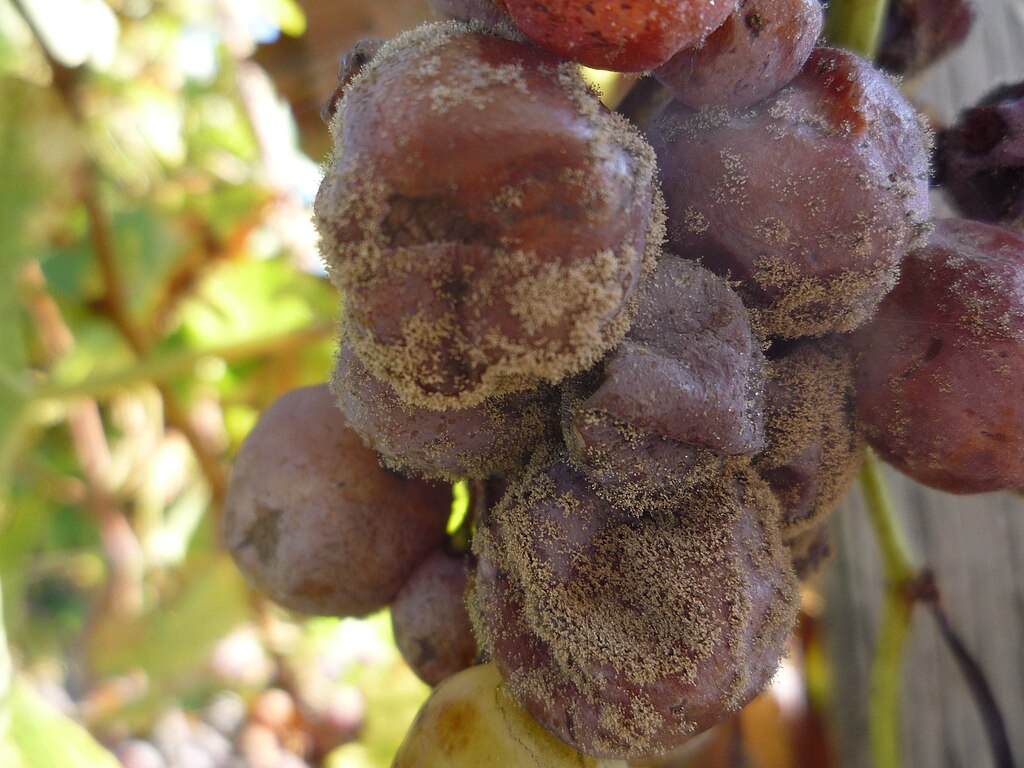
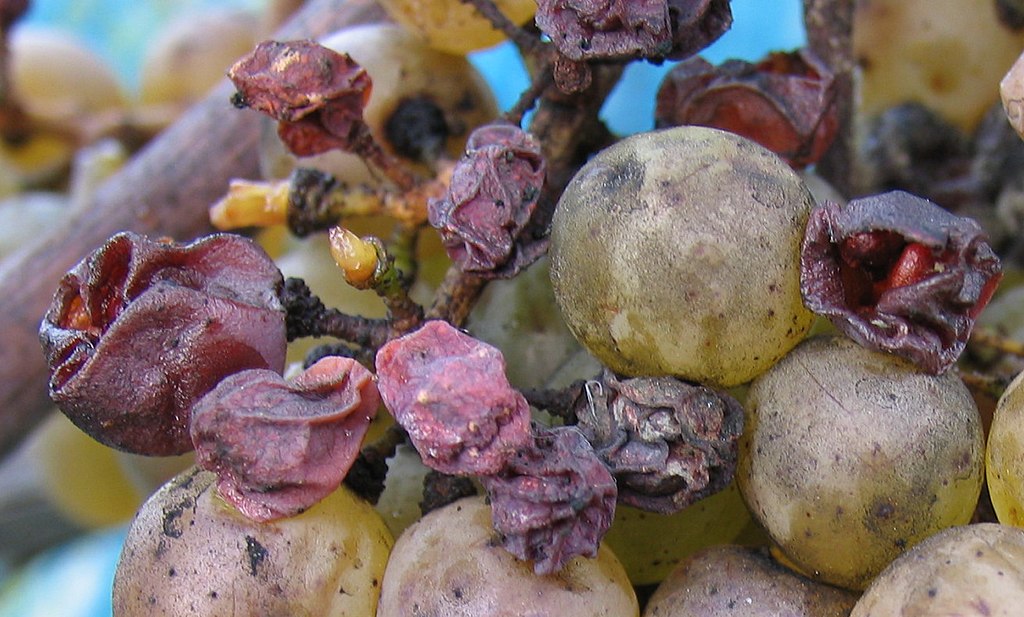
Botrytis cinerea, often called Noble Rot, is a fungus that is essential to some of the most famous, expensive, and delicious dessert wines in the world.  Any of these wines would be great with your pumpkin pie at Thanksgiving!

Here's your cheat sheet for what botrytis is, how it happens, and where to find the wines it has shaped.  (See the full collection of Wine Cheat Sheets here.)


To see the Cheat Sheet in full size…
…in Internet Explorer, right click on it and select “open in new tab.”
…in Chrome, right click on it and select “open link in new tab.”
…in Firefox, right click on it and select “view image.”   

Wikipedia commons has some great pictures of botrytis at work:


Friday, September 5, 2014

An eclectic list of good white wines under $15

I usually drink more red wines than white, but in the summer I like the cooler, lighter whites to combat the Houston heat.  Summer may be over (at least according to the school calender - the autumnal equinox won't arrive and officially bring fall with it until September 22), but we all know Houston will be sweltering for another month at least.  So I figured it wasn't too late to share a list of good white wines under $15.  This is a very eclectic list, based solely on what I happen to have tasted lately, so it's by no means exhaustive or even well-rounded.  But hopefully it will point you to something new to try!  

If I've written about the wine before, I linked to that post.  I also added a few words about the flavor profile.


DRY
  • Buchegger Riesling, from Austria
    • very fruity
  • Pewsey Vale Dry Reisling, from Australia
    • lemon, apricot, and minerality
  • Chateau Ste. Michelle Dry Riesling, from Washington State
    • green apple and lemon with some minerality
    • (link to buy online)
  • Sartori Pinot Grigio, from Italy
    • citrus, mineral, and floral notes
  • Fontana Candida Terre dei Grifi Frascati, from Italy
    • citrus, pineapple, with a hint of toast
  • Abadia de San Campio Terras Gauda Albarino, from Spain
    • citrus and pear, little-to-no oak
  • Vignerons du Pallet Muscadet, from the Loire Valley in France
    • simple citrus flavors, with bready qualities from sur lie aging
  • Gerard Bertrand Picpoul de Pinet, from Coteau de Languedoc in France
    • simple and fruity, little-to-no oak
  • McPherson Viognier, from Texas
    • tropical fruits, floral notes, balanced by earthiness

DRY SPARKLING
  • Anna de Codorniu, Brut Cava, from Spain
    • fruity and toasty, a bit like Champagne
    • (link to buy online)

DRY, HALF-SPARKLING (petillant/frizzante)

OFF DRY
  • Sauvion Vouvray (Chenin Blanc), from the Loire Valley in France
    • apple, lemon, peach, and earthiness

OFF DRY, HALF-SPARKLING (petillant/frizzante)
All of these are Vinho Verdes, and though they vary a bit in sweetness and flavor profile, they share the same crisp, refreshing, citrusy qualities.

MEDIUM SWEET

Friday, August 22, 2014

Wine Infographic: Riesling Cheat Sheet

Next up in the wine cheat sheet series:  Riesling!

See the full collection of wine cheat sheets here.


To see the Cheat Sheet in full size…
…in Internet Explorer, right click on it and select “open in new tab.”
…in Chrome, right click on it and select “open link in new tab.”
…in Firefox, right click on it and select “view image.”   

You might also be interested in:
Wine Infographic:  German Wine Cheat Sheet
How to Tell if German Wine is Sweet or Dry
How Sweet is Your Riesling (part 2)

Thursday, July 10, 2014

Wine Infographic: Recognizing Top Quality German Wine

As a follow-up to my German Wine Cheat Sheet from a few weeks ago, I'm sharing this guest infographic, which comes from the German auction house Auctionata. Since they deal in fine wine, they've developed this guide for international drinkers. They're going to help us navigate those complex German wine labels, which offer a wealth of information about the wine.  You can download a pdf of this graphic from Auctionata's blog at this link.


Friday, June 27, 2014

Wine Infographic: German Wine Cheat Sheet

Next up in the series: Germany!  German white wines are wonderful to drink in the summer heat, so now is the time to explore them.  (See the full collection of wine cheat sheets here.)


To see the Cheat Sheet in full size…
…in Internet Explorer, right click on it and select “open in new tab.”
…in Chrome, right click on it and select “open link in new tab.”
…in Firefox, right click on it and select “view image.”   

Sunday, March 24, 2013

New World vs. Old World


Have you ever heard wine described as “old world” or “new world”?  Knowing what those descriptions mean can really help your wine choices!

Old World

The “old world” of wine refers to the countries with the longest winemaking histories, or to be more specific, Europe.  France, Italy, Spain, and Germany are the most important regions here.  But the term “old world” is not only about history.  It implies a philosophy of winemaking as well as a stylistic influence.  The winemaking philosophy of the old world places the top priority on where the grapes are grown, and how they are (or should be) an expression of their microclimate.  The French call this terroir.  This is why most European wines are labeled by region rather than by grape (Germany being the exception).  Old world wines often have aromas/flavors which are more earthy and less fruity.

New World

The “new world” of wine refers to everything that isn’t part of the old world.  This includes North America, South America, South Africa, Australia, and New Zealand, among others.  In the new world of wine the grape is the top priority, so most wines are labeled with the grape varieties they contain.

How This Can Impact Your Wine Selections

Twice this past week I was having dinner with a group of friends, and we opened 2 bottles of wine.  Coincidentally, both times we opened an old world red wine first, followed by a new world red.  Both times the old world wine tasted great, with some smoky, herbal, and spicy aromas in addition to the fruit characteristics.  Both times the new world reds were wines I had had before and liked.  But when we drank them after the old world wines, they were so much fruitier by comparison that they tasted like juice – almost cloyingly sweet, although the wines were dry. 

The lesson I learned is that if I’m planning to open more than 1 bottle of wine in an evening, I need to think carefully about how the wines will impact each other, and in which order to drink them.  Just as drinking the old world reds first made the new world reds taste like juice, I suspect starting with a new world red and then moving to the old world could make the old world wine taste sour, bitter, or musty.  Of course, there is so much variation within these “old world” and “new world” styles that it depends on the specific wines you’re drinking.  But I think from now on I will play it safe and stick with all old world or all new world wines in 1 evening.

Saturday, December 15, 2012

How Sweet is Your Riesling? (part 2)


Many people avoid Rieslings because they don’t drink sweet wine.  However, Rieslings can be completely dry, extremely sweet, and everything in between.  The trouble is that it’s often difficult to tell how sweet any given bottle will be.  I've written before about the German system that can help with this, but now there's an even easier way!

The International Riesling Foundation has come to the rescue!  It has developed a sweetness scale that winemakers can include on their labels.  This scale is designed to “make it easier for consumers to predict the taste they can expect from a particular bottle of Riesling,” help consumers find wines they’ll enjoy, and thus help producers sell more wine.  The scale is entirely voluntary, but hopefully many producers will decide to participate.  (The scale was first available for the 2008 vintage.)

Saturday, November 10, 2012

How to Tell if German Wine is Sweet or Dry


German wine, which is primarily made from the Riesling grape, has a reputation for being sweet, but in reality it ranges from fully dry to fully sweet.  But if the bottles don’t tell you how sweet they are (and they usually don’t), how do you find the one you want?  A little background knowledge of the German quality system, the fermentation process, and some simple math.

Sweetness Levels
Wine sweetness levels in general are usually classified on the following scale:
  • Dry – not sweet at all (most wine falls here)
  • Off-dry – just a little sweet (a lot of Rieslings are here)
  • Medium-sweet – pretty darn sweet (Moscato d’Asti is usually classified here)
  • Sweet (or fully sweet) – very sweet, like dessert (non-sparkling Moscato is often here, along with Port and Ice Wine)

Germany and Wine
Germany is the coldest wine region on Earth.  It is so cold that grapes sometimes have difficulty ripening.  Consequently, the Germans label their wines by how ripe the grapes get.  Ripeness is measured by “must weight,” which is just a fancy way of saying how much sugar the grapes have in them at harvest time. 

When the wine is fermented, it’s the sugar in the grapes that turns into alcohol.  So “must weight” can easily be translated to potential alcohol.  We say “potential” alcohol, because here winemakers have a decision to make.  They can let ALL the sugar in the grapes ferment into alcohol and create a dry wine.  Or they can stop the fermentation at any point, leaving the remaining sugar unfermented (called “residual sugar”), and creating a wine with some degree of sweetness (and less alcohol). 

Sugar/Alcohol Levels
Below are some of the names you’ll see on the labels, listed with their potential alcohol levels.  Not every bottle will be labeled with one of these names, but most of them will.  (Note:  These numbers are approximate, since each German wine region has its own unique requirements.
  • Kabinett – 9.5% alcohol
  • Spatlese – 11% alcohol
  • Auslese – 13% alcohol
  • Beerenauslese – don’t worry about potential alcohol – this one will always be sweet
  • Eiswein – always very sweet
  • Trokenbeerenauslese – always very sweet

The Formula!

(  % Potential Alcohol   -   % Alcohol by Volume  )  x 2     =   % Residual Sugar

You know potential alcohol from the list above.  The winemaker is not required to tell you whether his wine is sweet or not, but he IS required to tell you how much alcohol is in it!  You can find the alcohol by volume (ABV) on the bottle.  By subtracting the numbers, you can tell whether the winemaker has fermented all the sugar out of his grapes, or has left some in the wine. 

Sometimes the winemaker will label the wine as sweet or dry, “troken” (dry) or “halbtroken” (off-dry) in German.  Then you don’t have to calculate; you know about how much sugar the wine will have:
  • Troken – dry, with a maximum of 1.8% residual sugar
  • Half-Troken – off-dry, with a maximum of 3.6% residual sugar

But how much sugar does it take to taste sweet?

Perception of Sweetness by Percent
Here is a chart to show you about how sweet a certain percentage of sugar will taste.  I’ve posted it before, but it’ll be useful here.  (Keep in mind that individual perceptions vary.)


Let’s take this formula for a test drive.  You see a Spatlese that says it has 8% ABV.  You know that if this wine is classified as a Spatlese, the grapes had a potential alcohol level of around 11%.  Therefore:  11% minus 8% equals 3%.  3% times 2 is 6%.  6% sugar puts this wine just into the medium-sweet range. 

Pick up a bottle of German Riesling this week and let me know if this helped!  Try it with spicy Asian food! 

Some Riesling producers around the world are starting to put a sweetness scale on their labels to help with this issue, and I’m planning a post on that next week.